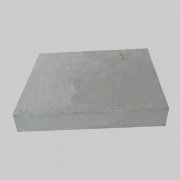
Tundish baking type inorganic magnesium thermal insulation board
The products are mainly used for various varieties of steel continuous casting,tundish lining bag lin-ing and in horizontal continuous casting.This product adopts inorganic adhesive,silica insulation board to avoid eeffect of steel aquatic”increasing silicon hydrogenation”.Improving the cleanliness of steel,because of good heat preservation performance,favorable stability and pull steel speed,improving the yield of liquid steel 0.5-1.0%.At the same time it also can improve the process of masonry remove.package.Product baked 800 to1000’C and 40 minutes can be casting steel.The comprehensive cost saves about thirty percent than magnesia coating cost,It is the current best product of hotpack pouring and tundish bag linging.
| Refractoriness
| Thermal conductivity
| The hot surface temperature | High temperature Ine changes | Flexural strength | Residual moisture | Loss on ignition | MgO |
| >1600℃ | <0.65W/M.K | 1000℃ | 0~±0.1% 1500℃x3h | ≥4.5Mpa | <0.7% | <7% | 65-70% |
Continuous casting Tundish modelCS-20 Neutral insulation board
The new CS-20 insulation board my comany with the Wuhan Iron and Steel Group Company second steel works developed jointly,erosion resistant,impact resistant,not fried,indehiscent,with good perf-ormance,thanthe current magnesian insulating board to improve consumer durables erosion 5 times.even more to solve the magnesia board is easy to water,moisture absorptton,pouring boiling serious problem than silica insulation board,provided high resistance to erosion by more than 10 times.in order to improve the continuous casting ladle liquid steel quality,puritying,played a big role.Currently in WISCO,Shougang,TISCO,long dozenA large number of the use of steel,and bring agreat effect for the user.